Key Highlights
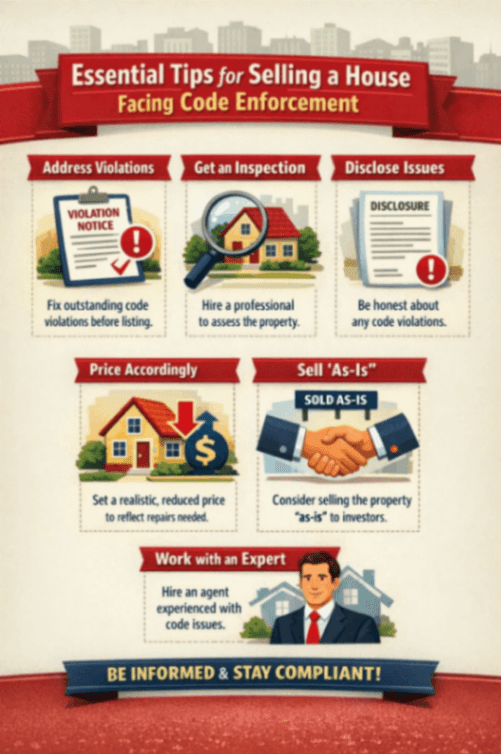
Facing code enforcement doesn’t mean you can’t sell your house. Understanding your options is the first step toward a successful real estate transaction.
- You can legally sell a property with a known code violation, but you must disclose it.
- Decide whether to handle repair costs yourself or sell your home as-is.
- Code violations often lead to a lower sale price to account for needed fixes.
- Selling to a cash buyer can simplify the process and bypass financing issues for home buyers.
- An experienced real estate agent is a valuable resource when navigating these challenges.
- Transparency with potential buyers is crucial to avoid legal problems later.
Introduction
Are you trying to sell a house that’s facing code enforcement? It can feel like a major roadblock in your real estate journey. A code violation, whether it’s a minor issue or a significant problem, adds a layer of complexity to the selling process. The good news is you have options. With the right strategy and clear guidance, you can navigate these challenges successfully. This guide will walk you through your choices, from making repairs to selling as-is, helping you find the best path forward.
Understanding Code Enforcement and Code Violations
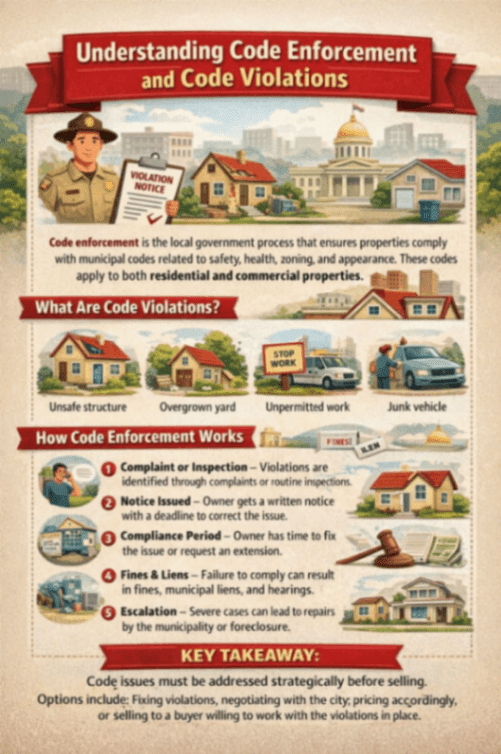
Before you can tackle the problem, it’s important to understand what you’re dealing with. Code enforcement is the system local governments use to make sure properties are safe and meet required standards. A code violation simply means your home doesn’t comply with one or more of these local building codes.
These rules exist to protect public health and safety. Understanding the specific violation affecting your property is the first step in creating a plan to sell your home. Let’s explore what code enforcement means for you and what common issues homeowners face.
What Is Code Enforcement and How Does It Affect Homeowners?
Code enforcement is how your local municipality ensures that buildings are safe and livable. Officials enforce local building codes that cover everything from electrical wiring to structural stability. For you as a homeowner, this process can directly impact your property value. Unresolved violations often lead to a lower appraisal and selling price because buyers factor in the cost of repairs.
Additionally, ignoring official notices can lead to legal consequences. You could face fines, liens placed on your property, or even legal action in severe cases. These penalties can complicate a sale and add financial pressure.
So, can someone force you to sell your house by reporting code violations? The simple answer is no. While a reported violation can trigger inspections and fines from code enforcement, it cannot legally force you to sell. However, the mounting repair costs and fines might make selling your house fast to a company like EPS Houses a practical solution to resolve the situation.
Common Types of Code Violations in U.S. Homes
Building code violations can range from simple fixes to major structural problems. Understanding the most common code violations helps you know what to look for on your property. Many of these issues are discovered during a professional home inspection, as they often relate to safety concerns.
These problems are frequently found in both older and newly renovated homes. Some of the most common building code violations that homeowners encounter include:
- Electrical issues: This includes outdated electrical panels, improper wiring, or a lack of GFCI outlets in kitchens and bathrooms.
- Plumbing problems: Leaky pipes, incorrect venting, and outdated materials are frequent culprits.
- Structural faults: Cracks in the foundation, improper roofing, or inadequate support beams pose serious safety issues.
- Permit problems: Renovations or additions completed without the necessary permits are a major red flag for buyers.
- Safety violations: Missing smoke alarms, improper handrails, or blocked emergency exits are common safety issues.
How Code Violations Are Identified and Reported
How do code violations get reported in the first place? Often, they are discovered during a routine home inspection when a property is being sold. An inspector might identify potential electrical issues or plumbing problems that don’t meet current standards.
Another common way violations are reported is through complaints. A neighbor might report an issue to local authorities, or a tenant might file a complaint about unsafe living conditions. Once a potential violation is on their radar, the local code enforcement office will typically send an officer to inspect the property.
If the officer confirms a violation, they will issue official violation notices. These notices detail the problem and provide a deadline for you to fix it. Ignoring these notices can lead to fines and other penalties, making it crucial to address them promptly.
Legal Options for Selling a House with Code Enforcement Issues
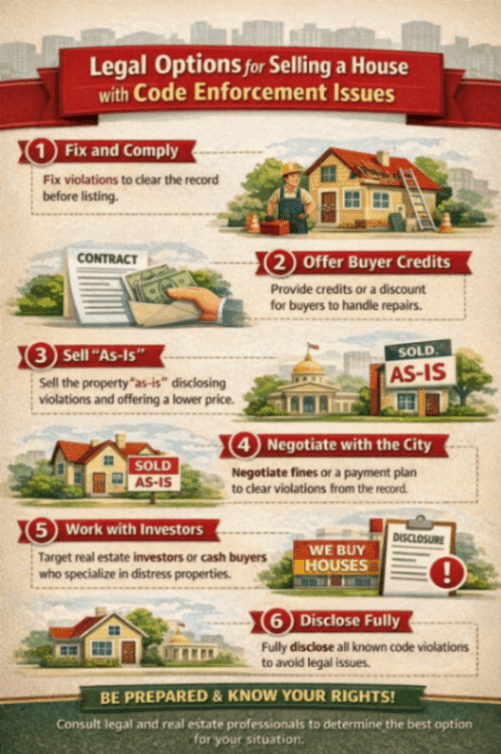
When your property has code enforcement issues, you might worry about the legal side of selling. The good news is that having unresolved code violations doesn’t automatically stop the sale process. However, you do need to be aware of the legal issues involved.
Being transparent and understanding your obligations are key. You have a few different paths you can take, each with its own set of rules to follow. Let’s look at whether you can legally sell with open violations and what you need to know about disclosure.
Can You Legally Sell a House With Unresolved Code Violations?
Yes, you can legally sell your house even if it has unresolved violations. There is no universal law that requires all code issues to be fixed before a sale. Many properties, especially older homes, are sold with elements that are not up to current code. The key is how you handle it.
Your primary legal obligation is honesty. You must disclose any known violations to potential buyers. Trying to hide problems can lead to serious legal trouble after the sale is complete. In most cases, the responsibility for fixing the issues transfers to the new owner upon closing, as long as this is clearly stated in the sales contract.
An experienced real estate agent can be a huge help here. They can guide you through the paperwork and ensure you meet all your legal obligations. For a more direct route, a cash home buyer can purchase the property as-is, taking on the responsibility for the code enforcement issues and simplifying the process for you.
State Laws and Local Regulations to Know
Regulations for real estate sales are not the same everywhere. Different states and even cities have their own local laws regarding property sales and code enforcement. For example, what is acceptable in one town might be a violation just across the county line due to stricter local building codes.
Some states give local governments more power to create their own rules, while others have more uniform state-wide regulations. This affects everything from disclosure requirements to whether certain repairs are mandatory before a sale. You may need to obtain necessary permits for any work you decide to do.
Understanding this landscape is important. Here’s a simple breakdown of how states approach these regulations:
| Rule Type | Description |
|---|---|
| Home Rule States | Local governments have broad authority to create their own regulations, which can override state-level rules. |
| Dillon Rule States | Local governments have limited authority and cannot modify state-level codes. Their powers are only those expressly granted by the state. |
| Combination | Most states use a mix of both, giving local authorities some power but with state oversight. |
Disclosure Requirements When Selling a Home Facing Code Enforcement
When selling a home with code issues, honesty is your best policy. Disclosure requirements mandate that you inform potential buyers about any known code violations. This transparency protects you from future lawsuits and helps set clear expectations for the buyer.
Failing to disclose known problems can have serious legal and financial repercussions. Even if you are selling the property “as-is,” you are still required to be upfront about its condition. A real estate agent can provide you with the proper disclosure forms for your area. The information you provide will likely influence the final sale price.
Here’s what you generally need to disclose:
- All known code violations, whether major or minor.
- Any official violation notices you have received from code enforcement.
- Copies of any inspection reports that detail the issues.
- Information about any unpermitted work done on the property.
Deciding Whether to Repair Code Violations or Sell As-Is
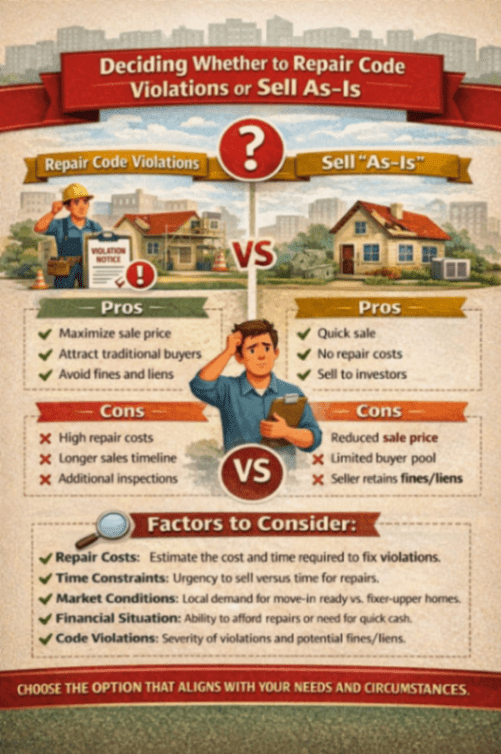
You’ve identified the code violation, and now you face a big decision: should you fix the issues or sell the house as it is? This choice is a central part of your selling strategy and depends on your budget, timeline, and the severity of the problems.
Each path has its benefits and drawbacks. Choosing to fix code violations could increase your home’s value, but it also requires time and money. Selling as-is is faster but usually means a lower price. Let’s weigh the pros and cons to help you decide.
Pros and Cons of Fixing Code Violations Before Listing
Handling the necessary repairs before you list your home can be a smart move. By fixing code issues, you can often increase your property value and appeal to a wider range of buyers, including those who need traditional financing. A move-in-ready home is attractive to many people.
However, this approach isn’t without its downsides. The repair costs can be substantial, especially for major problems. The process also takes time, which may not be ideal if you need to sell quickly. You don’t have to fix all code violations before listing, but addressing key ones can make a big difference.
Consider these points before you decide:
- Pro: A repaired home can command a higher selling price.
- Pro: It attracts more buyers and may sell faster in a traditional market.
- Con: Upfront repair costs can be high, and you may not recoup the full amount.
- Con: The repair process can be time-consuming and stressful.
What Selling As-Is Means for Sellers and Buyers
Is it possible to sell your house as-is if it has code violations? Absolutely. Selling in “as-is condition” means you are selling the property in its current state, and the buyer agrees to take on the responsibility for all necessary repairs, including fixing code violations. This approach greatly simplifies the selling process for you.
For sellers, this means no upfront repair costs and a much faster timeline. You don’t have to deal with contractors or permits. The trade-off is that you will likely have to accept a lower offer, as the buyer is factoring the cost of repairs into their price.
This option will narrow your buyer pool, as many traditional buyers are looking for a home that doesn’t need major work. However, it is very appealing to real estate investors and cash home buyer companies like EPS Houses that specialize in purchasing properties with issues. This makes the sell as-is route a great idea for those who prioritize a quick and simple transaction.
Are Repairs Always Necessary for Code-Enforced Properties?
Repairs are not always necessary when selling a home with code issues. You can definitely sell as-is, but the choice depends on the severity of the violations and your goals for the sale process. Minor issues might be worth fixing to attract more buyers, but for major, costly repairs, selling as-is is often the more practical path.
If you choose not to make repairs, complete transparency is vital. You must disclose all known code issues to avoid future legal consequences. A buyer who is fully aware of the property’s condition can’t come back later and claim you hid something from them.
Ultimately, the decision is yours. If your priority is to sell your house fast without the hassle and expense of renovations, selling as-is is a perfectly valid and common strategy. It allows you to move on quickly while letting the new owner handle the necessary repairs on their own timeline.
Steps to Prepare Your Home for Sale With Code Violations
Once you’ve decided on your strategy, it’s time to prepare your home for the market. Selling a property with code violations requires a bit more prep work than a standard sale. You’ll need to be organized and thorough to ensure a smooth transaction.
This involves assessing the problems, pricing your home correctly, and gathering all the right documents. Taking these steps can help you avoid surprises and make negotiations over things like repair credits much easier. Let’s break down what you need to do to get ready.
Assessing the Scope and Impact of Violations
The first step to sell a house facing code enforcement is to understand exactly what you’re dealing with. Knowing the full scope of the violations is crucial for pricing, disclosure, and negotiations. A professional home inspection is a great starting point, as it can uncover issues you weren’t aware of, from minor safety concerns to major code violations.
For more serious problems, like structural issues, you may want to consult with a specialized contractor or engineer. Their expertise can give you a clear picture of the severity and the potential cost to fix the problems. This information will be invaluable whether you decide to repair the issues or sell as-is.
To properly assess the situation, you should:
- Obtain official documentation from your local code enforcement office.
- Hire a qualified home inspector for a thorough assessment.
- Get repair estimates from licensed contractors.
- Prioritize issues based on safety concerns and cost.
Pricing Strategies for Homes Facing Code Enforcement
Code enforcement violations almost always affect the selling price of a house. Buyers will expect a lower price to compensate for the money and effort they will have to spend on repairs. Your pricing strategy needs to reflect the home’s current condition to attract serious offers.
To set a fair price, start by looking at comparable properties in your area that have recently sold. Then, subtract the estimated repair costs from that market value. This will give you a realistic sale price that accounts for the violations. Pricing too high will scare away potential buyers, while pricing too low means leaving money on the table.
Working with a real estate agent experienced in selling homes with code issues can be very helpful. They can perform a comparative market analysis and help you find the sweet spot. The goal is to set a competitive price that acknowledges the repair costs while still getting you the best possible return.
Documenting Violations and Repair Estimates
Proper documentation is your best friend when selling a home with code violations. To document everything for buyers, start by gathering all official paperwork. This includes any violation notices you’ve received from the city, as they clearly outline what needs to be fixed according to local building codes.
Next, get detailed, written estimates from licensed contractors for the repair costs. Having multiple quotes can demonstrate that you’ve done your homework and are presenting a fair assessment of the expenses involved. If you decide to make the repairs yourself, keep all permits, receipts, and warranties to prove the work was done correctly.
This packet of information should be shared with all serious potential buyers. It builds trust and provides a clear basis for negotiating the price or potential repair credits. Being organized and transparent makes the entire process smoother and shows buyers you have nothing to hide.
Attracting Buyers for Homes With Code Issues
When your home has code issues, your target audience changes. The pool of potential buyers will likely be smaller and consist of people who are not afraid of a project. Your marketing efforts should be aimed directly at this unique buyer pool.
Instead of focusing on traditional homebuyers looking for a perfect, move-in-ready house, you’ll want to attract real estate investors, flippers, or handy individuals looking for a bargain. These buyers see potential where others see problems. Let’s explore how to market your property to the right people.
Marketing Strategies for Code-Enforced Properties
Your marketing strategy for a home with a code violation needs to be honest and targeted. Instead of hiding the issues, you should frame the property as an opportunity. Highlight its potential and be upfront about the work that needs to be done.
A real estate professional who has experience with these types of sales can help you craft the right message. They can connect you with a network of investors and buyers who are specifically looking for fixer-uppers. Direct outreach to cash buyers is another effective strategy. Companies that advertise “we buy houses” are often your ideal audience.
Here are some marketing strategies to consider:
- Be transparent in your listing: Clearly state that the home has code issues and is being sold as-is.
- Highlight the potential: Focus on the property’s strong points, like its location, lot size, or architectural style.
- Target investors: Use platforms and language that appeal to real estate investors and flippers.
- Work with a specialist: Partner with a cash home buyer like EPS Houses that specializes in properties with code violations.
The Role of Real Estate Agents When Selling a House With Code Violations
An experienced real estate agent can be a crucial partner when selling a house with a code violation. Their expertise goes beyond just listing a property; they can help you navigate the entire complex process from start to finish. They understand the disclosure laws in your area and can ensure you avoid potential legal issues.
A knowledgeable agent can help you price the home correctly by analyzing the market and factoring in repair costs. They also have access to a network of potential home buyers, including investors who are specifically looking for properties like yours. This can save you a lot of time and effort in finding the right buyer.
Furthermore, they can handle the difficult negotiations that often come with selling a home with code issues. They act as a buffer between you and the buyer, helping you reach a fair agreement on price and terms. Their guidance can make a stressful situation much more manageable.
Cash Buyers vs. Traditional Buyers: What’s Different?
The impact of code issues is vastly different for a cash buyer compared to traditional buyers. Traditional buyers usually rely on mortgage financing, and lenders are often unwilling to approve loans for properties with significant code violations. This can cause deals to fall through late in the process.
A cash buyer, on the other hand, doesn’t need bank approval. This eliminates the financing hurdle and makes the sale much simpler and faster. Cash buyers, like the team at EPS Houses, are often investors who are accustomed to dealing with code issues and are looking for properties they can renovate.
Here’s a quick comparison:
- Financing: Traditional buyers need lender approval, which can be denied due to code issues. A cash buyer doesn’t need a loan.
- Speed: Cash sales can close in a matter of days or weeks, while traditional sales take much longer.
- Repairs: Traditional buyers often want repairs made before closing. Cash buyers purchase as-is.
- Certainty: Cash offers are more certain and less likely to fall through.
- Buyer Pool: Selling to a cash buyer narrows your buyer pool but targets the most likely purchasers.
Navigating Offers, Negotiations, and Closing With Code Enforcement Concerns
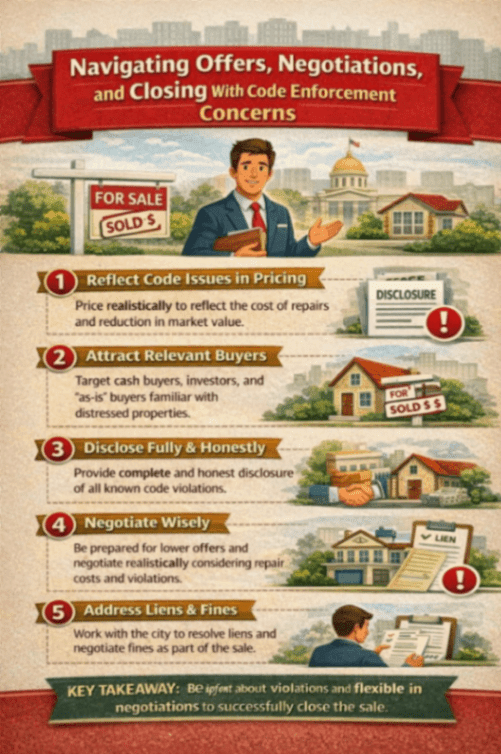
You’ve prepared your home and attracted a buyer—now it’s time for the final stretch. Handling offers and navigating the closing process can be tricky when code enforcement is involved. Buyers will use the violations as leverage, which will directly impact the negotiations and final sale price.
Being prepared for this stage is key to a successful outcome. You’ll need to work with lenders, inspectors, and possibly attorneys to get to the finish line. Let’s cover how to handle offers and speed up the closing for a home with code concerns.
How Code Violations Affect Offers and Negotiations
When you receive offers on a house with a code violation, expect them to be lower than the asking price for a comparable, compliant home. Buyers will use the known issues to negotiate a lower sale price or ask for repair credits to cover the cost of fixing the problems.
Having your own repair estimates is a powerful tool during these negotiations. It allows you to respond to lowball offers with factual data about the actual costs involved. This can help you and the buyer find a middle ground that feels fair to both parties.
Here’s how violations typically impact negotiations:
- Buyers will almost always use violations to ask for a price reduction.
- You might negotiate repair credits, where you contribute to the buyer’s closing costs.
- The severity of the violation will determine its impact on the final sale price.
- Being transparent from the start can lead to smoother, more good-faith negotiations.
Working With Lenders and Inspectors During the Sale
The home inspection and financing stages are where code enforcement issues often cause the biggest problems. A home inspection will officially document all the problems for the buyer, giving them a clear list of what needs to be addressed. This report becomes a central piece of the negotiation process.
After the inspection, the buyer’s mortgage lenders come into play. So, will lenders approve a mortgage if there are code violations? Often, the answer is no, especially for significant safety or structural issues. Lenders want to ensure the property they are financing is a sound investment, and major code problems represent a risk.
This is why sales to traditional buyers can fall apart. An experienced real estate agent can sometimes help negotiate a solution, but these financing hurdles are a major reason why selling to a cash buyer is often a more reliable option for homes with code issues. No bank is needed, which simplifies the entire transaction.
Speeding Up the Closing Process for Code-Enforced Homes
How quickly can you sell a house under code enforcement? A quick sale is entirely possible, but your strategy matters. To speed up the closing process, the most important thing you can do is be organized and transparent from the very beginning. Have all your documentation ready, including violation notices and repair estimates.
Addressing any liens or legal issues tied to the code violation ahead of time will also prevent delays. If there are unpaid fines, they will need to be settled before the title can be transferred to a new owner. Working with a real estate attorney can help you clear up any of these potential roadblocks.
The fastest way to achieve a quick sale is to work with a cash buyer. With no need for lender approvals or lengthy appraisals, a cash sale can often close in as little as one to two weeks. If you need to sell your house fast, especially in Florida, contacting a “we buy houses” company like EPS Houses at https://www.epshouses.com is your most direct path to a speedy closing.
Conclusion
Navigating the complexities of selling a house facing code enforcement can be daunting, but with the right approach, you can successfully manage the process. Whether you decide to address the violations or sell your property as-is, understanding your legal obligations and the implications for pricing and marketing is vital. Remember, each step—from assessing the scope of violations to documenting repair estimates—can significantly impact your sale. By employing effective marketing strategies and collaborating with knowledgeable real estate agents, you can attract the right buyers and facilitate a smoother transaction. If you have any questions or need personalized assistance, get in touch for guidance tailored to your unique situation.
Frequently Asked Questions
How do code enforcement violations affect the selling price of a house?
Code enforcement violations typically lead to a lower price for your home. Buyers and appraisers will reduce the property’s market value to account for the estimated repair costs. To attract offers, you will likely need to set a sale price that is below that of comparable homes without code issues.
Do I have to fix all code violations before listing my house for sale?
No, you do not have to fix every code violation. While making necessary repairs can simplify the selling process, it’s often more practical to sell the home in its as-is condition, especially if repair costs are high. You must, however, disclose all known issues to the buyer.
Are there buyers who specialize in purchasing homes with code violations?
Yes, many real estate investors and cash buyer companies specialize in purchasing homes with code violations. These potential buyers look for properties they can renovate, making them an ideal audience. This simplifies the sale process, as they buy “as-is” and handle repairs after closing.